


Born in Italy in 1915, Harry Bertoia moved to the United States during his.jpg) youth. He studied at the prestigious Cranbrook Academy of Art—a veritable laboratory of American design—where he crossed paths with Charles Eames and Florence Knoll, among others.
youth. He studied at the prestigious Cranbrook Academy of Art—a veritable laboratory of American design—where he crossed paths with Charles Eames and Florence Knoll, among others.
A designer, but also a sculptor and artist, Bertoia developed a fascination with metal at a very early age. He worked with, experimented with, and reimagined this material until it became his signature.
In the 1950s, his collaboration with Knoll allowed him to freely explore new forms. It was then that he conceived his famous Bertoia Collection, composed of structures made of welded steel wire. This was a particularly innovative approach for the time: rather than creating solid forms, Bertoia designed furniture using metal and… plenty of empty space.
The result? Graphic, airy, and functional pieces that blur the line between furniture design and sculpture.
And Bertoia didn’t stop at armchairs. He continued his artistic work in parallel, notably creating his famous sound sculptures, sometimes referred to as Sonambient. Made of metal rods, they produce vibrations and sounds when set in motion. With Bertoia, ultimately, metal is something to be looked at, touched… and even listened to.
.jpg) With Harry Bertoia, there’s no need to go overboard. A few steel rods are all it takes to create pieces that have become staples of design history.
With Harry Bertoia, there’s no need to go overboard. A few steel rods are all it takes to create pieces that have become staples of design history.
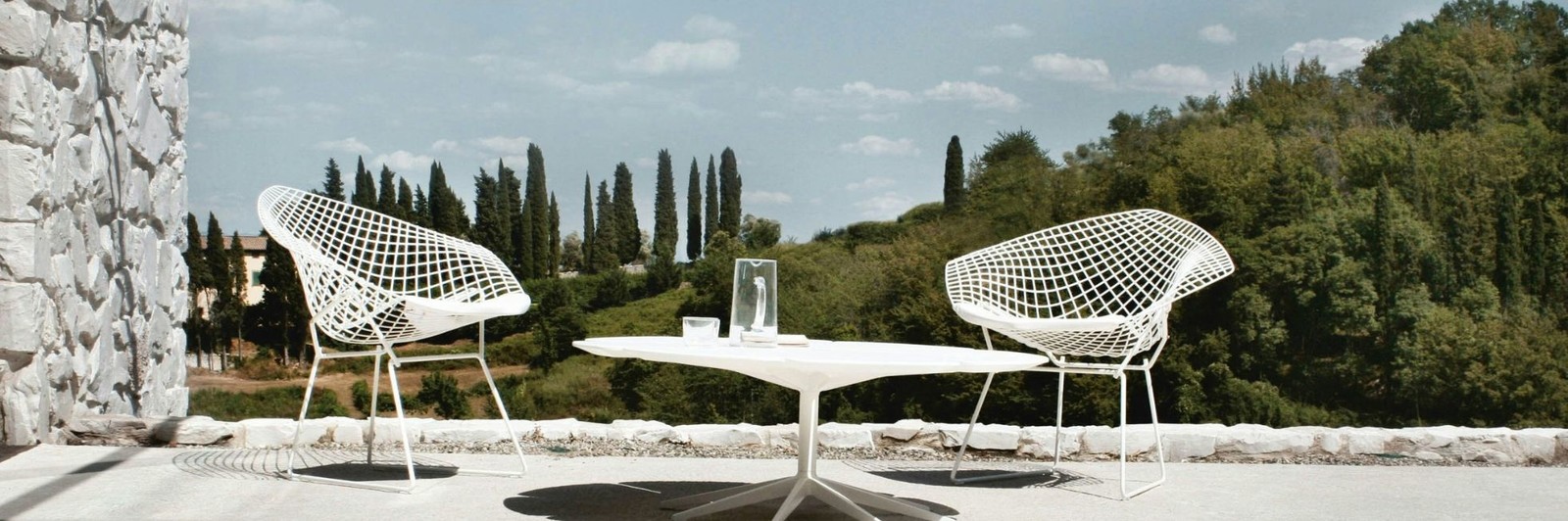
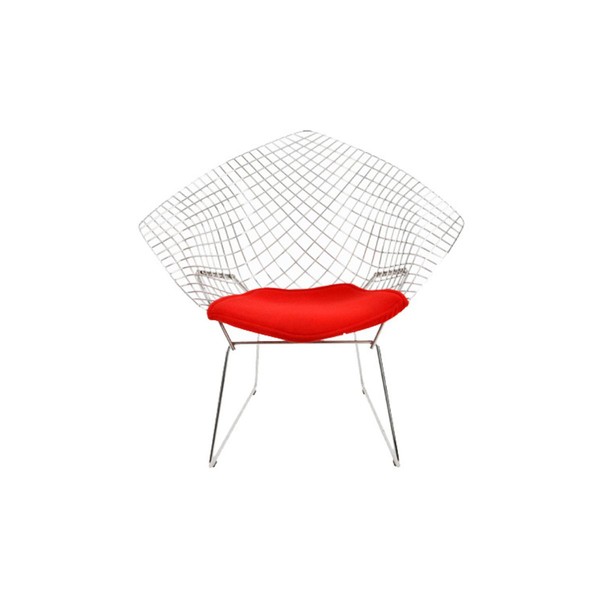
The most famous is undoubtedly the Diamond Chair, designed in 1952 and produced by Knoll. Its structure of welded steel wires forms a sculptural and instantly recognizable silhouette.
Openwork and completely transparent, it almost seems to float in space. In a lounge, showroom, or VIP area, the Diamond adds a distinctive design statement without overwhelming the space.
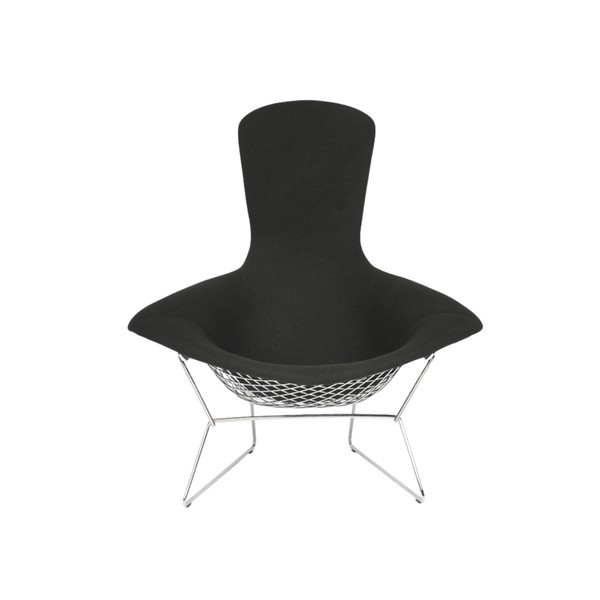
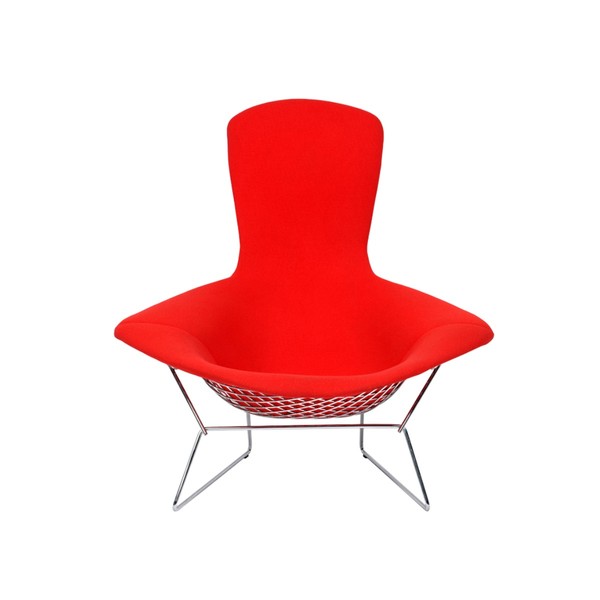
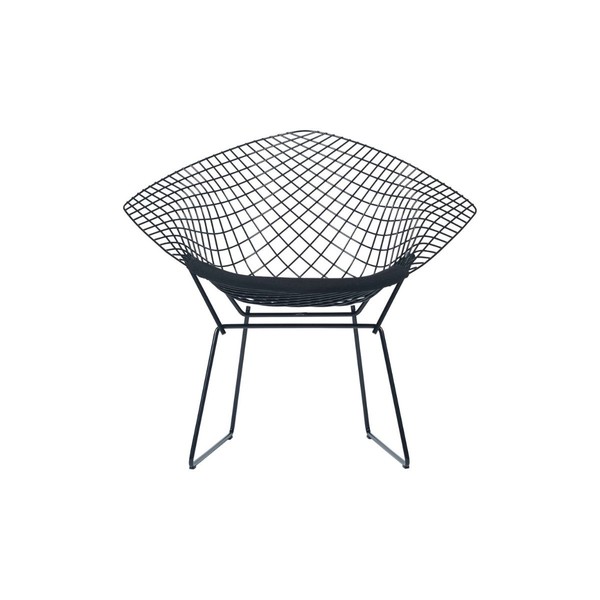
In the same vein, the Bertoia armchair incorporates this graphic use of metal into a more compact silhouette. Its openwork structure allows light and the eye to pass through—a real advantage when furnishing a space while maintaining a sense of lightness.
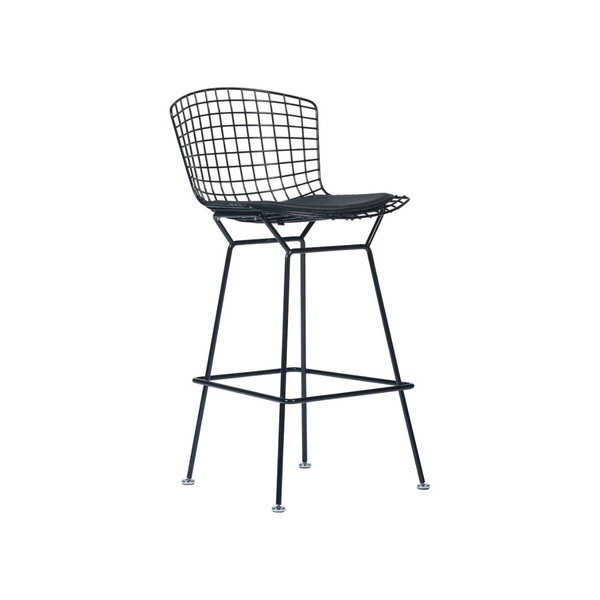
And because Bertoia isn’t limited to armchairs, the Bertoia stool also features this steel-wire construction. Whether placed around a bar, a counter, or in a cocktail area, it extends the collection’s identity and helps create a cohesive design scheme.
Three pieces, one idea: making negative space an integral part of the design.
More than 70 years after their creation, pieces from the Bertoia Collection continue to find their place in contemporary interior designs. And in the event industry, their visual lightness is a real asset. The Diamond Armchair, the Bertoia Armchair, and the Bertoia Stool help define the rhythm of a space without overwhelming it. Their metal frames blend effortlessly with glass, wood, or textiles to create contrasts between materials.
.jpg)
This versatility makes them particularly well-suited for event design in booths, cocktail receptions, showrooms, VIP areas, and receptions. Above all, Bertoia’s creations possess that rare quality: they are instantly recognizable without dominating the space.
Plenty of character. Very little material. Bertoia had it all figured out.
At Maison Vachon, we love pieces that have a story to tell. And with Harry Bertoia, the story goes far beyond that of a single armchair. His work shows that a functional object can also become a sculptural work of art, and that a material as industrial as steel can give rise to furniture that is light, elegant, and capable of standing the test of time.
This vision echoes our approach to event furniture rental: selecting iconic pieces that add character to a setting without ever dictating a single way they must be used. The Diamond armchair, the Bertoia armchair, and the Bertoia stool—all available for rent at Maison Vachon—allow you to incorporate a true hallmark of 20th-century design into your events.
It just goes to show that sometimes, all it takes is a single thread to make all the difference.
Harry Bertoia
Knoll
Harry Bertoia
Knoll
Harry Bertoia
Knoll
Harry Bertoia
Knoll
Harry Bertoia
Knoll

Added to selection!


